ΓΙΑ ΤΟΝ ΔΡΟΜΟ ΠΡΟΣ ΤΟ ΑΝΑΡΧΙΚΟ – ΑΝΑΡΧΟΣΥΝΔΙΚΑΛΙΣΤΙΚΟ – ΙΔΕΩΔΕΣ. ΑΠΟ ΕΔΩ ΩΣ ΕΚΕΙ!
Ο ΑΓΩΝΑΣ ΚΑΤΑ ΤΗΣ ΚΛΙΜΑΤΙΚΗΣ ΚΡΙΣΗΣ – Η ΠΡΑΣΙΝΗ ΠΑΓΚΟΣΜΙΑ ΑΝΟΙΞΗ (GGS) – ΣΥΝΕΧΙΖΕΤΑΙ ΜΕ ΑΜΕΙΩΤΗ ΕΝΤΑΣΗ. ΔΕΙΤΕ – ΚΑΝΤΕ ΚΛΙΚ:
http://www.anarchy.no/green.html & http://www.anarchy.no/ggs1.html
Διαδραστικός Οικονομικοπολιτικός Χάρτης
https://www.anarchy.no/a_e_p_m.html. Ο Οικονομικοπολιτικός Χάρτης (EPM).
ΕΙΝΑΙ Η ΟΙΚΟΝΟΜΙΑ, ΑΝΟΗΤΕ! Η δυνατότητα οικονομικά
προσιτής διαβίωσης είναι κατεξοχήν ζήτημα της πολιτικής Cogrips. Για τη συνοπτική παρουσίαση του
μοντέλου και της πολιτικής Cogrips, δείτε (κάντε κλικ):
https://www.indeco.no/archive/samgrep3.htm.
Διαβάστε
ολόκληρο το υλικό, συμπεριλαμβανομένων των κειμένων στους συνδέσμους.
Συνεργατισμός – Συνεταιρισμοί. Για τον αναρχισμό και το συνεταιριστικό κίνημα
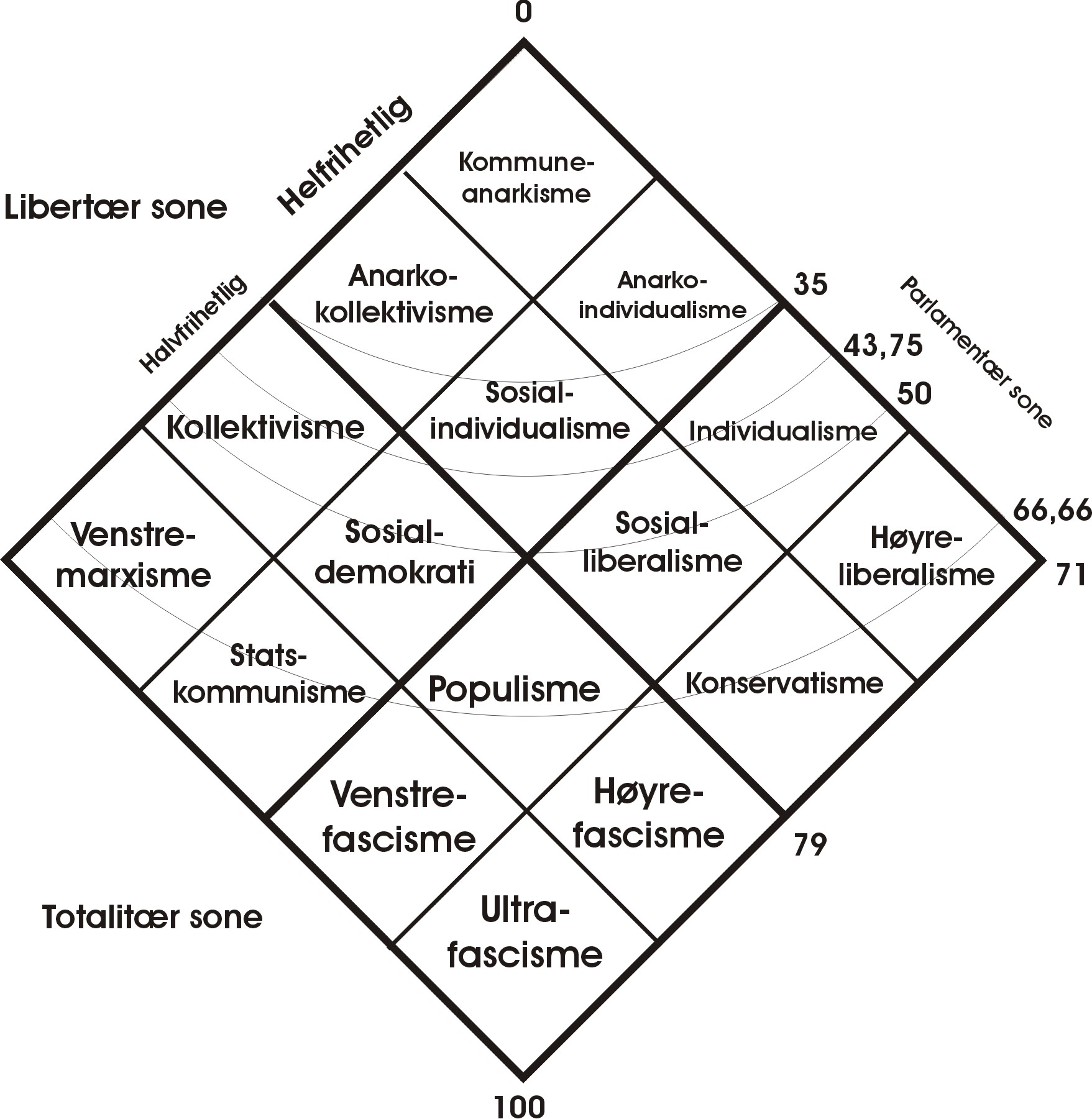
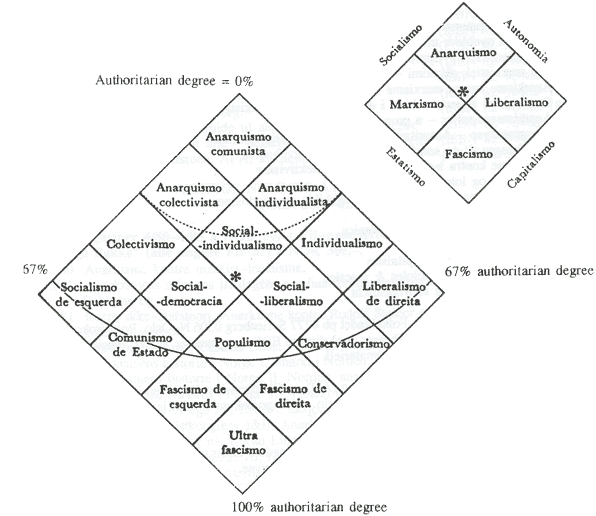
Μια σύντομη εξέταση του, κατά κύριο λόγο, κοινοβουλευτικού αναρχισμού σε αντιπαραβολή με τον, κατά κύριο λόγο, αμεσοδημοκρατικό αναρχισμό. Το καθοριστικό κριτήριο είναι η επιρροή του Λαού έναντι εκείνης των Αρχών (του κυβερνώντος κατεστημένου) στη διακυβέρνηση: η επιρροή του Λαού πρέπει να είναι ίση ή μεγαλύτερη του 56,25%, ενώ η επιρροή των Αρχών —συμπεριλαμβανομένου του κοινοβουλίου— πρέπει να είναι μικρότερη του 43,75% (ο «βαθμός αυταρχισμού»). Με άλλα λόγια, το κοινοβούλιο διαθέτει λιγότερη εξουσία, ενώ η αντιεξουσία που ασκεί ο Λαός υπερβαίνει σημαντικά το 50%. Αυτό δεν σημαίνει ότι καταργείται το κοινοβούλιο· σημαίνει ότι ο Λαός διαθέτει ουσιαστική αντιεξουσία, η οποία υπερβαίνει το όριο του 50% κατά 6,25 ποσοστιαίες μονάδες. Κατά κανόνα, αυτό συνεπάγεται συχνότερη προσφυγή σε δημοψηφίσματα —όπως συμβαίνει, για παράδειγμα, στην Ελβετία— και η αντιεξουσία πρέπει να είναι τόσο οικονομική (σοσιαλισμός) όσο και πολιτική (αυτονομία), προκειμένου το σύστημα να χαρακτηριστεί ως «αμεσοδημοκρατικός αναρχισμός». Στην κορυφή του οικονομικοπολιτικού χάρτη —στο αναρχικό ιδεώδες— η επιρροή του Λαού στη διακυβέρνηση ανέρχεται στο 100%, τόσο από οικονομική όσο και από πολιτική άποψη (δηλαδή, η αντιεξουσία είναι 100%), ενώ η επιρροή και η εξουσία του κοινοβουλίου είναι 0%. Τότε ο βαθμός αυταρχισμού είναι 0%, ενώ η αντιεξουσία —ο «βαθμός αναρχίας»— είναι 100%. Το όριο του 43,75% για τον βαθμό αυταρχισμού δεν είναι αυθαίρετο: έχει επιλεγεί επειδή η «κοινοβουλευτική ζώνη» στον οικονομικοπολιτικό χάρτη —από 66,67% έως 43,75% αυταρχισμού— καταλαμβάνει έκταση ίση με εκείνη της «ζώνης ολοκληρωτισμού».
Το μοντέλο Samgreps (Cogrips) και η αντίστοιχη πολιτική των NØI–INDECO–OSE βασίζονται πρωτίστως στον κοινοβουλευτικό αναρχισμό· ωστόσο, με μικρές προσαρμογές, μπορούν να εφαρμοστούν και στον αμεσοδημοκρατικό αναρχισμό. Επομένως, έχουν γενική εφαρμογή στο φιλελεύθερο σοσιαλδημοκρατικό —ή αναρχικό— τεταρτημόριο του οικονομικοπολιτικού χάρτη, φτάνοντας μέχρι την κορυφή του: το αναρχικό ιδεώδες. Αυτό συνεπάγεται, μεταξύ άλλων, περισσότερες επιχειρήσεις που διοικούνται με αναρχοσυνδικαλιστικές αρχές και ευρύτερη ανάπτυξη των συνεταιρισμών. Το αναρχικό ιδεώδες είναι ρεαλιστικό και απολύτως εφικτό — είναι ο στόχος μας! Ωστόσο, η ελευθερία μοιάζει με τον ορίζοντα [https://www.anarchy.no/power.html]: όσο προχωρούμε προς αυτόν, τόσο ένας νέος ορίζοντας εμφανίζεται μπροστά μας —στην προκειμένη περίπτωση, ένας ακόμη μεγαλύτερος βαθμός ελευθερίας. Το αναρχικό ιδεώδες —το ιδεώδες της ελευθερίας— δεν είναι στατικό, αλλά δυναμικό, και θα συνεχίσει να εξελίσσεται. ο στόχος είναι το ίδιο το ταξίδι!
Norsk
Litt om i hovedsak parlamentarisk anarkisme versus i hovedsak direkte demokratisk anarkisme. Grensen går ved at Folkets versus Øvrighetens innflytelse på styringen er lik eller større enn 56,25 %, og Øvrighetens, inklusive parlamentets, innflytelse er mindre enn 43,75 % autoritærgrad. Parlamentet har altså mindre makt og motmakten fra Folket er signifikant over 50%. Det betyr ikke at parlamentet nedlegges, men at Folket har signifikant motmakt som overstiger 50% grensen med 6, 25 %. Vanligvis innebærer dette økt bruk av folkeavstemninger, som f.eks. i Sveits, og motmakten må være både økonomisk (sosialisme) og politisk (autonomi), begge deler, for at systemet skal kalles direkte demokratisk anarkisme. På toppen av det økonomisk-politiske kartet, det anarkistiske ideal, er Folkets innflytelse på styringen 100%, både økonomisk og politisk, dvs. motmakten er 100%, og parlamentets innflytelse og makt er lik 0%, det er 0% autoritærgrad og motmakten, anarkigraden, er 100%. Grensen på 43,75% autoritærgrad har med at parlamentær sone på ØP-kartet mellom 66,67 % autoritærgrad og 43,75 % autoritærgrad da er like stort i flateinnhold som totalitær sone, og er altså ikke tilfeldig valgt.
NØI-INDECO-OSE’s Samgreps-modell og policy er basert på i hovedsak parlamentarisk anarkisme, men den kan også brukes, med små justeringer, i direkte demokratisk anarkisme, og gjelder altså generelt for den liberale sosialdemokratiske = anarkistiske kvadranten, også for toppen av det økonomisk politiske kartet, det anarkistiske ideal. Dette innebærer blant annet flere anarko-syndikalistisk styrte bedrifter og flere kooperativer generelt. Det anarkistiske ideal er realistisk og fullt oppnåelig, og det er vårt mål, men husk at friheten er som horisonten [https://www.anarchy.no/power.html], når du beveger deg mot den, dukker det stadig opp en ny, med altså større frihet i dette tilfellet. Det anarkistiske ideal, frihetens ideal, er altså ikke statisk, men dynamisk, og vil stadig utvikles videre. Veien er målet!
English
ABOUT THE ROAD TO THE ANARCHIST - ANARCHO-SYNDICALISTIC - IDEAL. FROM HERE TO THAT
THE FIGHT AGAINST THE CLIMATE CRISIS – THE GREEN GLOBAL SPRING (GGS)
–
CONTINUES AT FULL SPEED, SEE - CLICK ON:
http://www.anarchy.no/green.html & http://www.anarchy.no/ggs1.html
Interactive Economic-Political Map
https://www.anarchy.no/a_e_p_m.html. The Economic-Political Map (EPM).
It's the ECONOMY stupid. Affordability is all about
Cogrips-policy. The Summary of the Cogrips-model and -policy, see (click on):
https://www.indeco.no/archive/samgrep3.htm.
Read
it all including the stuff at the links.
Samvirke - kooperasjon. Om anarkisme og samvirkebevegelse - kooperasjonen
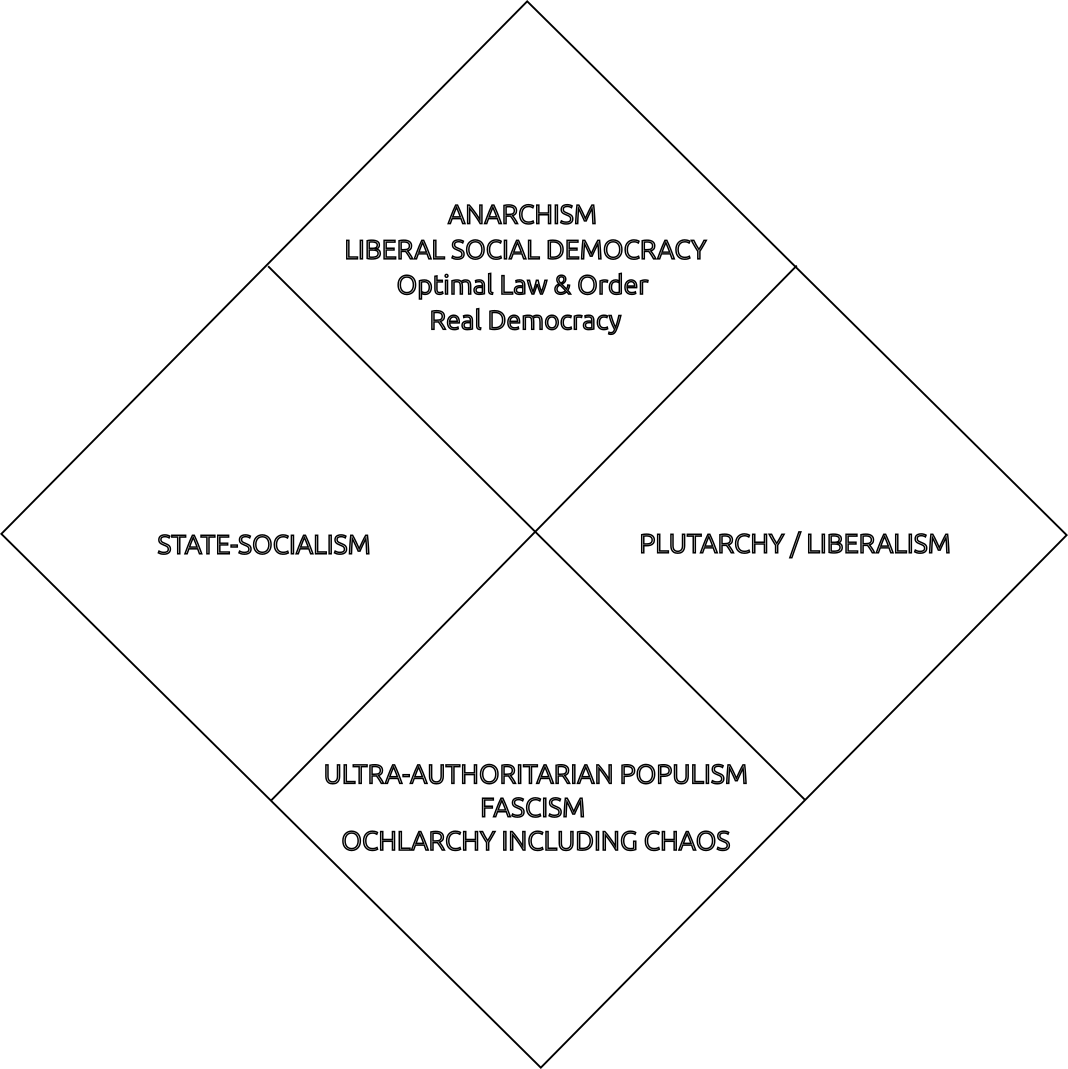
A brief look at, primarily, parliamentary anarchism versus, primarily, direct-democratic anarchism. The threshold is defined by the influence of "the People" versus that of "the Authorities" (the ruling establishment) on governance: the People’s influence must be equal to or greater than 56.25%, while the influence of the Authorities—including the parliament—must be less than 43.75% (the "degree of authoritarianism"). In other words, the parliament holds less power, and the counter-power exerted by the People significantly exceeds 50%. This does not mean the parliament is abolished; rather, it means the People possess a significant counter-power that surpasses the 50% mark by 6.25%. Typically, this entails an increased use of referendums—as seen, for example, in Switzerland—and the counter-power must be both economic (socialism) and political (autonomy) for the system to be classified as "direct-democratic anarchism." At the pinnacle of the economic-political map—the anarchist ideal—the People’s influence on governance is 100% in both economic and political terms (i.e., the counter-power is 100%), while the parliament’s influence and power are 0%. In this state, the degree of authoritarianism is 0%, and the counter-power—the "degree of anarchy"—is 100%. The 43.75% threshold for the degree of authoritarianism is not arbitrary; it is chosen because the "parliamentary zone" on the economic-political map—spanning from 66.67% to 43.75% authoritarianism—thereby occupies an area equal in size to the "totalitarian zone."
The NØI-INDECO-OSE "Samgreps" (Cogrips) model and policy are primarily based on parliamentary anarchism; however, with minor adjustments, it can also be applied to direct-democratic anarchism. It is, therefore, generally applicable to the liberal social-democratic—or anarchist—quadrant, extending even to the pinnacle of the economic-political map: the anarchist ideal. This entails, among other things, a greater number of anarcho-syndicalistically managed enterprises and a broader range of cooperatives. The anarchist ideal is realistic and entirely attainable—it is our goal—but remember that freedom is like the horizon [https://www.anarchy.no/power.html]: as you move toward it, a new one constantly emerges—in this instance, representing an even greater degree of freedom. The anarchist ideal—the ideal of freedom—is not static, but dynamic, and will continue to evolve. The journey itself is the goal!
| Countries: | Rank of country according to libertarian degree, and type of system | Libertarian degree and (authoritarian degree) % | Degree of socialism and (capitalism) % | Degree of autonomy and (statism) % | Gini-index | |
|---|---|---|---|---|---|---|
| Rank | System | |||||
| Norway | 1 | Anarchy | 54,0 (46,0) | 55,0 (45,0) | 53,2 (46,8) | 25,8 |
| Switzerland | 2 | Anarchy | 53,0 (47,0) | 51,0 (49,0) | 55,1 (44,9) | 33,1 |
| Iceland | 3 | Anarchy | 52,0 (48,0) | 54,0 (46,0) | 50,1 (49,9) | 25,0 (est.) |
| Liechtenstein | 4 | Soc.dem. | 49,5 (50,5) | 51,4 (48,6) | 47,7 (52,3) | 32,0 (est.) |
| Luxembourg | 5 | Soc.dem. | 49,2 (50,8) | 52,1 (47,9) | 46,5 (53,5) | 30,8 |
| Denmark | 6 | Soc.dem. | 48,8 (51,2) | 55,3 (44,7) | 43,0 (57,0) | 24,7 |
| Japan | 7 | Soc.dem. | 48,5 (51,5) | 55,2 (44,8) | 42,6 (57,4) | 24,9 |
| Belgium | 8 | Soc.dem. | 48,2 (51,8) | 54,0 (46,0) | 43,0 (57,0) | 25,0 |
| Finland | 9 | Soc.dem. | 47,9 (52,1) | 53,8 (46,2) | 42,6 (57,4) | 26,9 |
| Sweden | 10 | Soc.dem. | 47,5 (52,5) | 54,0 (46,0) | 41,7 (58,3) | 25,0 |
| Netherlands | 11 | Soc.dem. | 47,2 (52,8) | 52,0 (48,0) | 42,8 (57,2) | 30,9 |
| Canada | 12 | Soc.dem. | 46,8 (53,2) | 50,9 (49,1) | 43,0 (57,0) | 33,1 |
| Austria | 13 | Soc.dem. | 46,5 (53,5) | 52,1 (47,9) | 41,4 (58,6) | 30,0 |
| Ireland | 14 | Populist | 46,2 (53,8) | 45,0 (55,0) | 47,4 (52,6) | 35,9 |
| Germany | 15 | Soc.dem. | 45,9 (54,1) | 53,0 (47,0) | 39,6 (60,4) | 28,3 |
| Spain | 16 | Soc.dem. | 45,5 (54,5) | 51,5 (48,5) | 40,1 (59,9) | 32,5 |
| Australia | 17 | Populist | 45,0 (55,0) | 48,0 (52,0) | 42,2 (57,8) | 35,2 |
| United King. | 18 | Populist | 44,5 (55,5) | 44,7 (55,3) | 44,3 (55,7) | 36,0 |
| New Zealand | 19 | Populist | 44,0 (56,0) | 44,6 (55,4) | 42,4 (57,6) | 36,2 |
| France | 20 | Soc.dem. | 43,5 (56,5) | 51,4 (48,6) | 36,6 (63,4) | 32,7 |
| Italy | 21 | Populist | 43,0 (57,0) | 44,7 (55,3) | 41,3 (58,7) | 36,0 |
| USA | 22 | Cons. lib. | 42,5 (57,5) | 24,5 (75,5) | 69,8 (30,2) | 40,8 |
| Israel | 23 | Populist | 42,3 (57,7) | 47,8 (52,2) | 37,3 (62,7) | 35,5 |
| Hong Kong | 24 | Cons. lib. | 42,1 (57,9) | 22,1 (77,9) | 74,8 (25,2) | 43,4 |
| Greece | 25 | Populist | 42,0 (58,0) | 47,9 (52,1) | 36,6 (63,4) | 35,4 |
The estimates are approximately figures. © IIFOR/IJA ISSN 0800 - 0220 2007 and later. Anarchy = here social-individualist anarchism; Soc. dem. = social democrat marxism; Populist = here moderate parliamentarian democratic fascism; Cons. lib. = Conservative liberalism. See economic-political map at System theory and EP-map . Ranking of countries according to libertarian degree, estimates of the libertarian degree in general, and information on methodology, see Ranking and System theory - Chapter V.B. . According to ThesaurusLegend: approximately = (of quantities) imprecise but fairly close to correct. Thus: The estimates are approximately figures = The estimates are imprecise but fairly close to correct figures. We have used " , ", the European standard instead of American/UK standard, i.e. " . " as decimal separator.
The term "ca" is an abbreviation for the latin circa, which means about or approximately.
A gini index below 35 indicates socialism, and above indicates capitalism.
NB! Trumpism is ultra-fascist, see (click on): https://www.anarchy.no/ija151.html .
À PROPOS DU CHEMIN VERS L’IDÉAL ANARCHISTE – ANARCHO-SYNDICALISTE. D’ICI À LÀ
LA LUTTE CONTRE LA CRISE CLIMATIQUE – LE PRINTEMPS VERT MONDIAL (GGS)
–
SE POURSUIT À PLEIN RÉGIME. VOIR – CLIQUER SUR :
http://www.anarchy.no/green.html & http://www.anarchy.no/ggs1.html
Carte économico-politique interactive
https://www.anarchy.no/a_e_p_m.html. La carte économico-politique (EPM).
C’est l’ÉCONOMIE, idiot ! L’accessibilité économique dépend
entièrement de la politique Cogrips. Pour le résumé du modèle et de la politique Cogrips, voir
(cliquer sur) :
https://www.indeco.no/archive/samgrep3.htm.
Lisez
tout, y compris les documents accessibles par les liens.
Coopération et coopératives. À propos de l’anarchisme et du mouvement coopératif
Un bref aperçu de l’anarchisme principalement parlementaire, par opposition à l’anarchisme principalement fondé sur la démocratie directe. Le seuil est défini par l’influence du « Peuple » par rapport à celle des « Autorités » (l’establishment dirigeant) sur la gouvernance : l’influence du Peuple doit être égale ou supérieure à 56,25 %, tandis que celle des Autorités — y compris le parlement — doit être inférieure à 43,75 % (le « degré d’autoritarisme »). Autrement dit, le parlement détient moins de pouvoir, et le contre-pouvoir exercé par le Peuple dépasse nettement les 50 %. Cela ne signifie pas que le parlement est aboli ; cela signifie plutôt que le Peuple dispose d’un contre-pouvoir significatif qui dépasse le seuil des 50 % de 6,25 points de pourcentage. En règle générale, cela implique un recours accru aux référendums — comme, par exemple, en Suisse — et le contre-pouvoir doit être à la fois économique (socialisme) et politique (autonomie) pour que le système soit qualifié d’« anarchisme de démocratie directe ». Au sommet de la carte économico-politique — l’idéal anarchiste — l’influence du Peuple sur la gouvernance est de 100 %, tant sur le plan économique que politique (autrement dit, le contre-pouvoir est de 100 %), tandis que l’influence et le pouvoir du parlement sont de 0 %. Dans cette situation, le degré d’autoritarisme est de 0 %, et le contre-pouvoir — le « degré d’anarchie » — est de 100 %. Le seuil de 43,75 % du degré d’autoritarisme n’est pas arbitraire ; il a été choisi parce que la « zone parlementaire » de la carte économico-politique — qui s’étend de 66,67 % à 43,75 % d’autoritarisme — occupe ainsi une superficie égale à celle de la « zone totalitaire ».
Le modèle « Samgreps » (Cogrips) et la politique correspondante de NØI-INDECO-OSE reposent principalement sur l’anarchisme parlementaire ; toutefois, moyennant des ajustements mineurs, ils peuvent également s’appliquer à l’anarchisme de démocratie directe. Ils sont donc applicables, de manière générale, au quadrant social-démocrate libéral — ou anarchiste —, jusqu’au sommet de la carte économico-politique : l’idéal anarchiste. Cela implique, entre autres, un plus grand nombre d’entreprises gérées selon les principes de l’anarcho-syndicalisme et un éventail plus large de coopératives. L’idéal anarchiste est réaliste et tout à fait réalisable — c’est notre objectif —, mais souvenez-vous que la liberté est comme l’horizon [https://www.anarchy.no/power.html] : à mesure que vous avancez vers lui, un nouvel horizon apparaît sans cesse — représentant, en l’occurrence, un degré de liberté encore plus élevé. L’idéal anarchiste — l’idéal de liberté — n’est pas statique, mais dynamique, et continuera d’évoluer. Le voyage lui-même est le but !